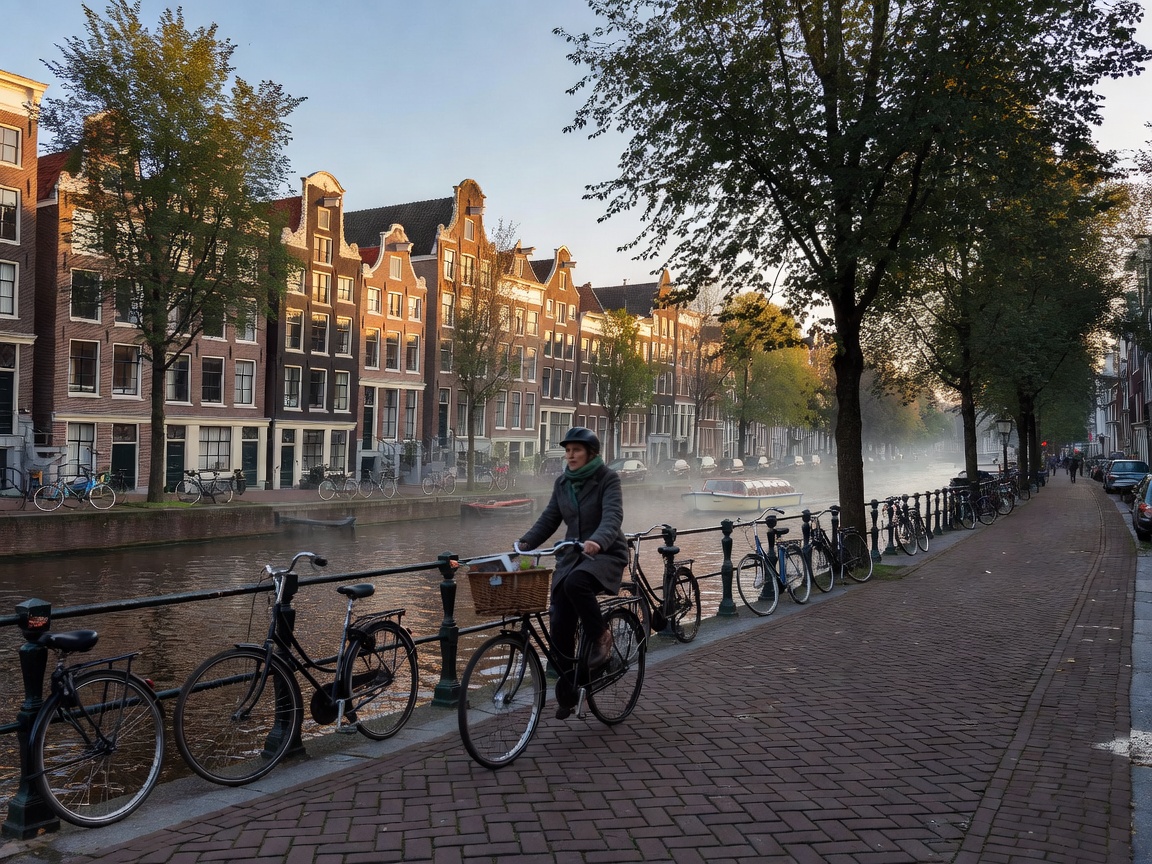
Start with the city network
Central Amsterdam is dense, flat and designed around separated cycle movement in many places. That makes it approachable for riders who want easy access from accommodation or a railway arrival. It also creates a busy environment. Tram tracks, pedestrians, delivery vehicles and turning traffic demand attention even when the road feels familiar. A relaxed urban ride is different from a fast training ride.
Use the city for orientation and short mileage rather than assuming every canal route is quiet. The Rijksmuseum area, Jordaan and eastern waterfront each offer different traffic patterns. Navigation is easier when you treat bridges and major crossings as route decisions, not interruptions.
Why Waterland changes the feel
North of Amsterdam, the Waterland landscape becomes open and low-lying, with dykes, drainage channels, villages and long sightlines. Routes around places such as Broek in Waterland and Durgerdam offer a clear contrast with the city. Wind matters more than gradient, and exposed surfaces can make a modest distance feel substantial.
The trade-off is flexibility. Rural loops have fewer places to shorten the ride, shelter from rain or replace a mechanical part. Check the return options before leaving the city, and carry enough food and water for the section between settlements.
Choose a bike that fits the surface
A standard city or hybrid bicycle suits paved cycleways and village roads. A heavier upright bike is comfortable at an easy pace but can feel inefficient against wind. A road bike may be quick on smooth asphalt yet less forgiving around cobbles, narrow paths and rough edges. E-bikes reduce the effect of wind and allow a wider loop, but battery range and charging become part of the plan.
Rental rules, deposits and opening hours vary. Confirm collection arrangements directly with the provider. A helmet may be optional under local law, but visibility and predictable riding remain important on busy junctions.
Build a sensible weekend
Keep the first ride short enough to learn the local signs and bike handling. Use the second day for Waterland or another North Holland route if the forecast and transport plan support it. Amsterdam Centraal provides a useful rail base, while ferries across the IJ can alter the shape of an urban loop. Check bicycle carriage rules with the relevant operator before relying on a train connection.
The strongest version of this break combines a city evening, one countryside ride and a clear fallback. If wind or rain makes the exposed loop unpleasant, a shorter urban route still delivers active time without turning the return journey into a problem.