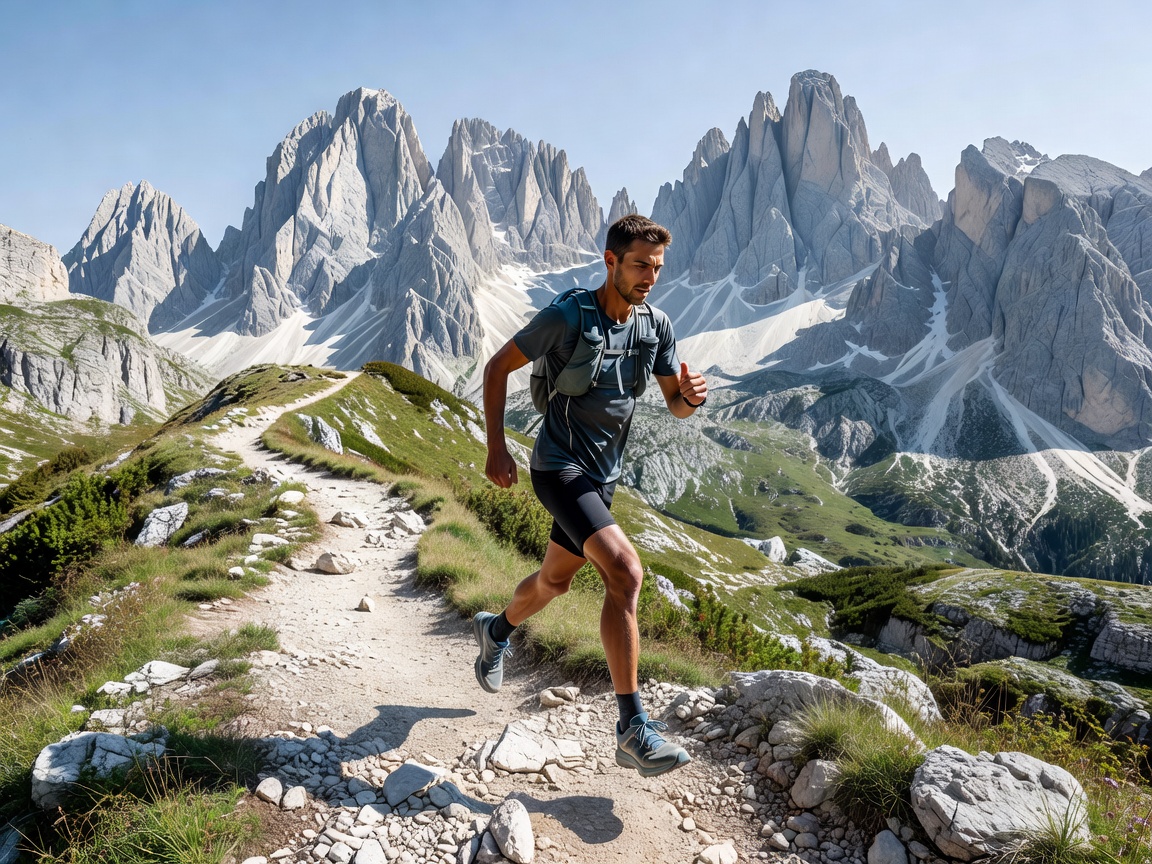
Start low if time is tight
Valleys around Cortina d’Ampezzo, Val Gardena and Alta Badia provide access to marked paths, forest roads and villages. They are easier to reach and offer more options to shorten a route. The compromise is density: popular paths can be busy, and a scenic loop may include walkers, mountain bikers and service traffic.
Valley running is not automatically easy. Limestone tracks can be uneven, and an apparently modest climb can accumulate quickly. Use contour information, surface descriptions and local route maps rather than distance alone.
High routes add exposure
Paths around passes and rifugi offer the dramatic terrain many visitors want, but they bring exposure, weather sensitivity and slower movement. A route can be runnable for one section and a steep hike for another. Loose rock, steps and narrow traverses change the risk profile.
Mountain huts can be useful waypoints, but opening patterns and booking requirements vary. Confirm details directly and carry enough food for a route that takes longer than the optimistic estimate.
Lift access is a tool, not a guarantee
Summer lifts can reduce the initial ascent and put a runner close to higher trails. They also introduce opening times, queues, weather interruptions and a final descent that still has to be managed. Check the relevant lift operator and mountain authorities before building the day around a connection.
If a lift is unavailable, the route may become a substantially different outing. Keep a valley alternative ready. That is especially useful on a short break when a single change can otherwise remove the main session.
Run conservatively on unfamiliar ground
Trail shoes with suitable grip, a light layer, water and navigation support are sensible basics. In high terrain, a phone signal should not be treated as a safety system. Tell someone the intended route and expected return, and respect signs, closures and changing mountain conditions.
Use the second day to balance the first: pair a high route with a lower loop, or select a village-to-village run with straightforward transport. The best Dolomites weekend leaves enough energy to enjoy the descent and the evening.